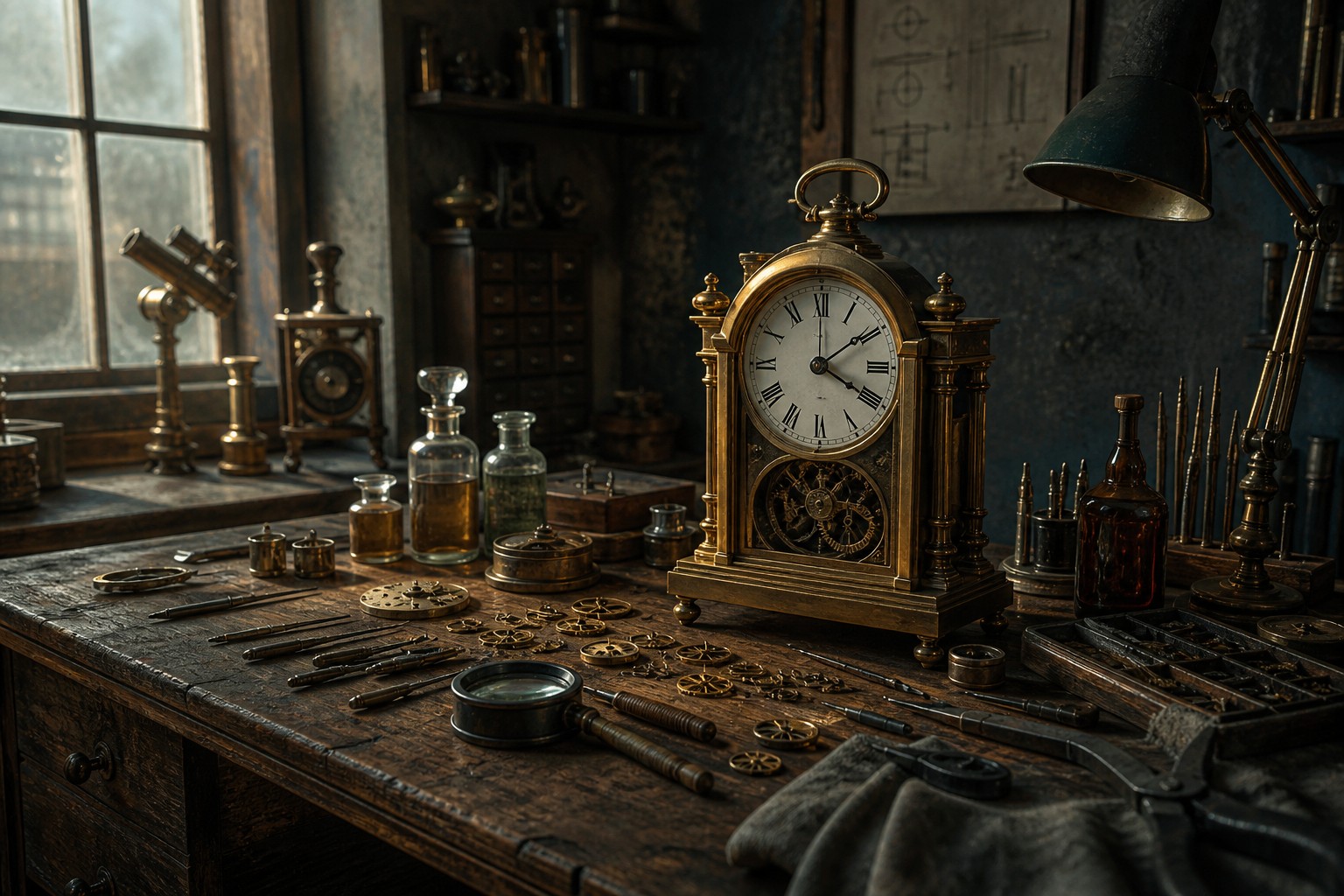
Bench assessmentA clock is studied as a complete object before the movement is separated from the case.

This gallery presents the kinds of surfaces, movements and decisions we handle: rusted steel, muted gold dials, aged timber, small parts and longcase mechanisms.
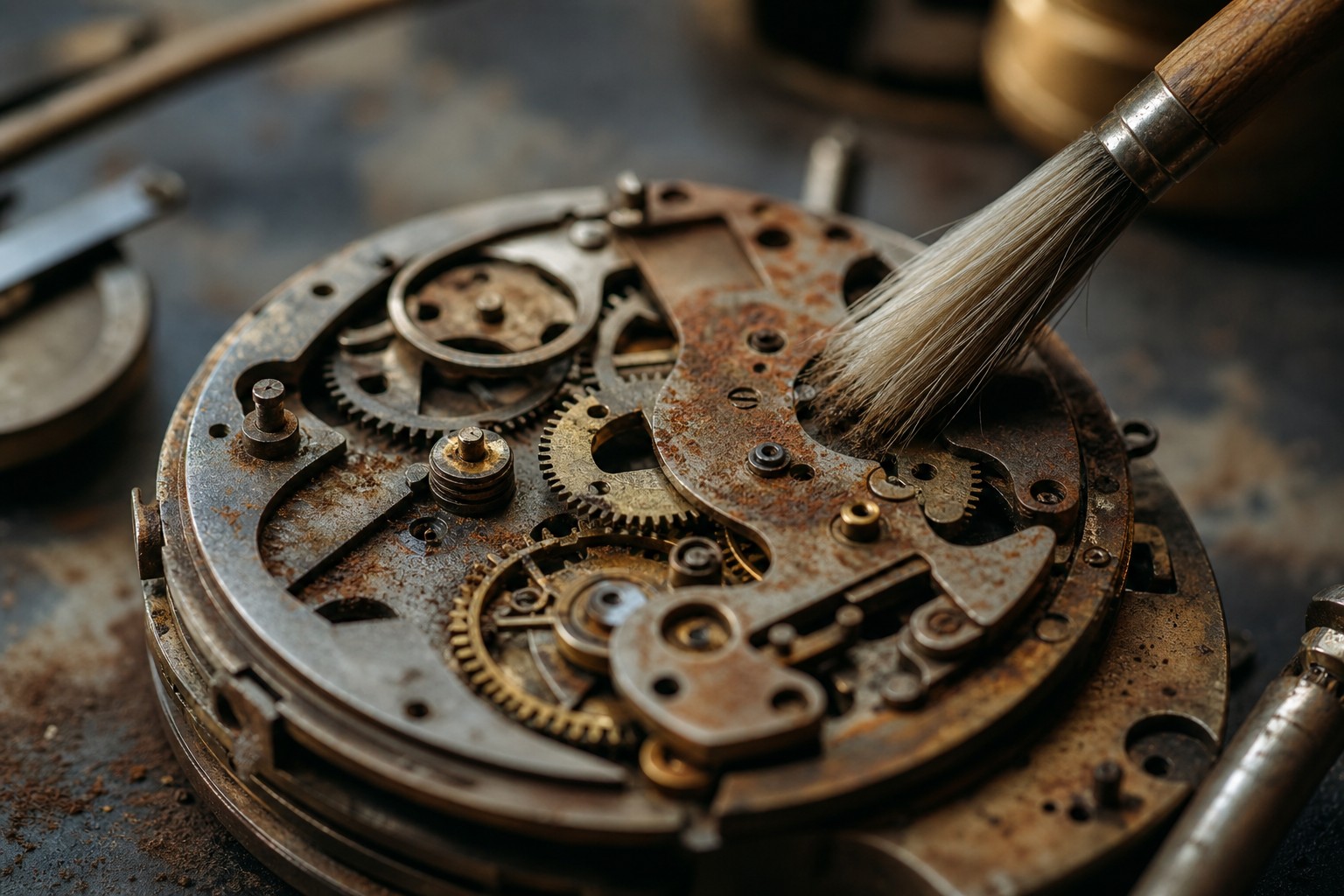
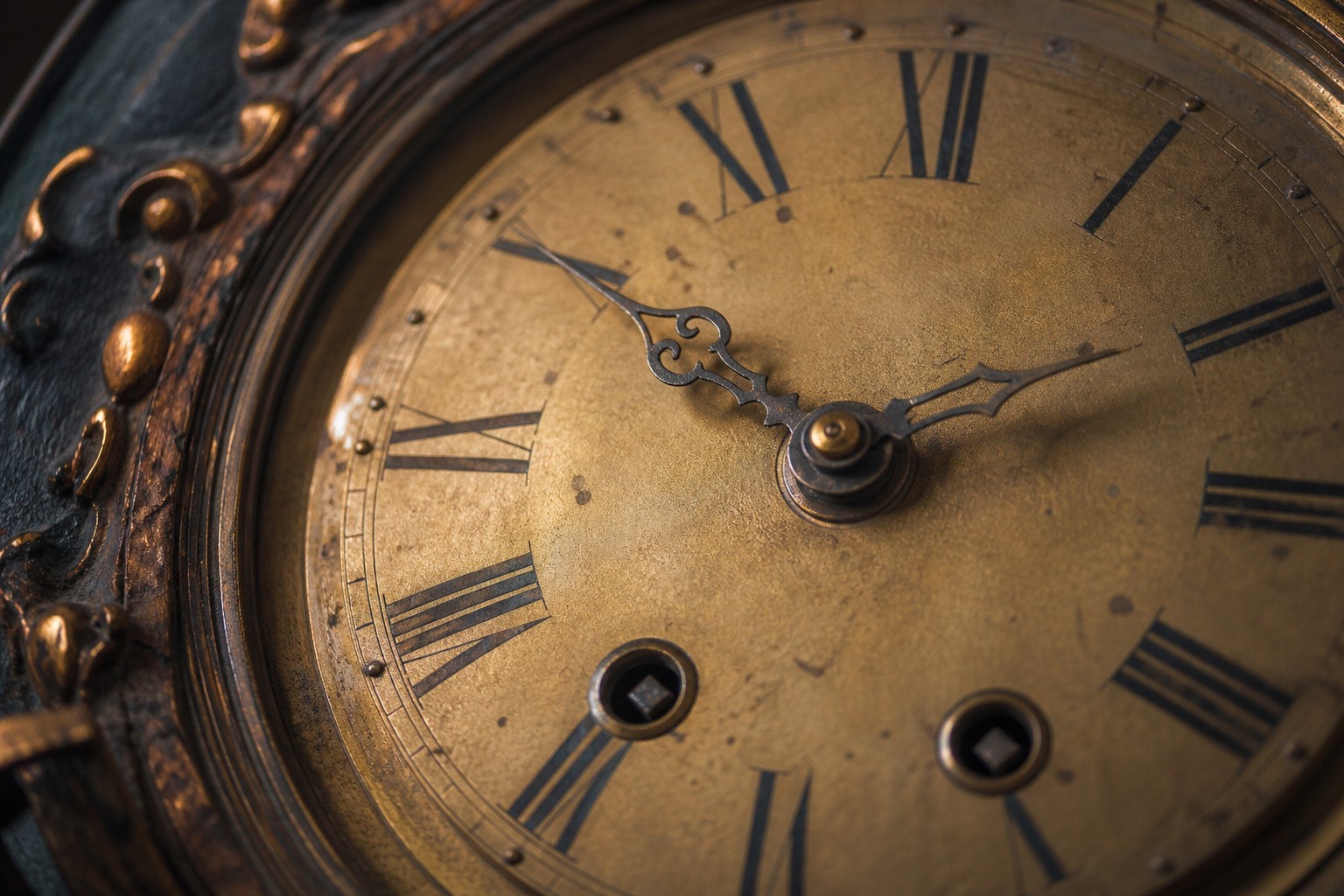
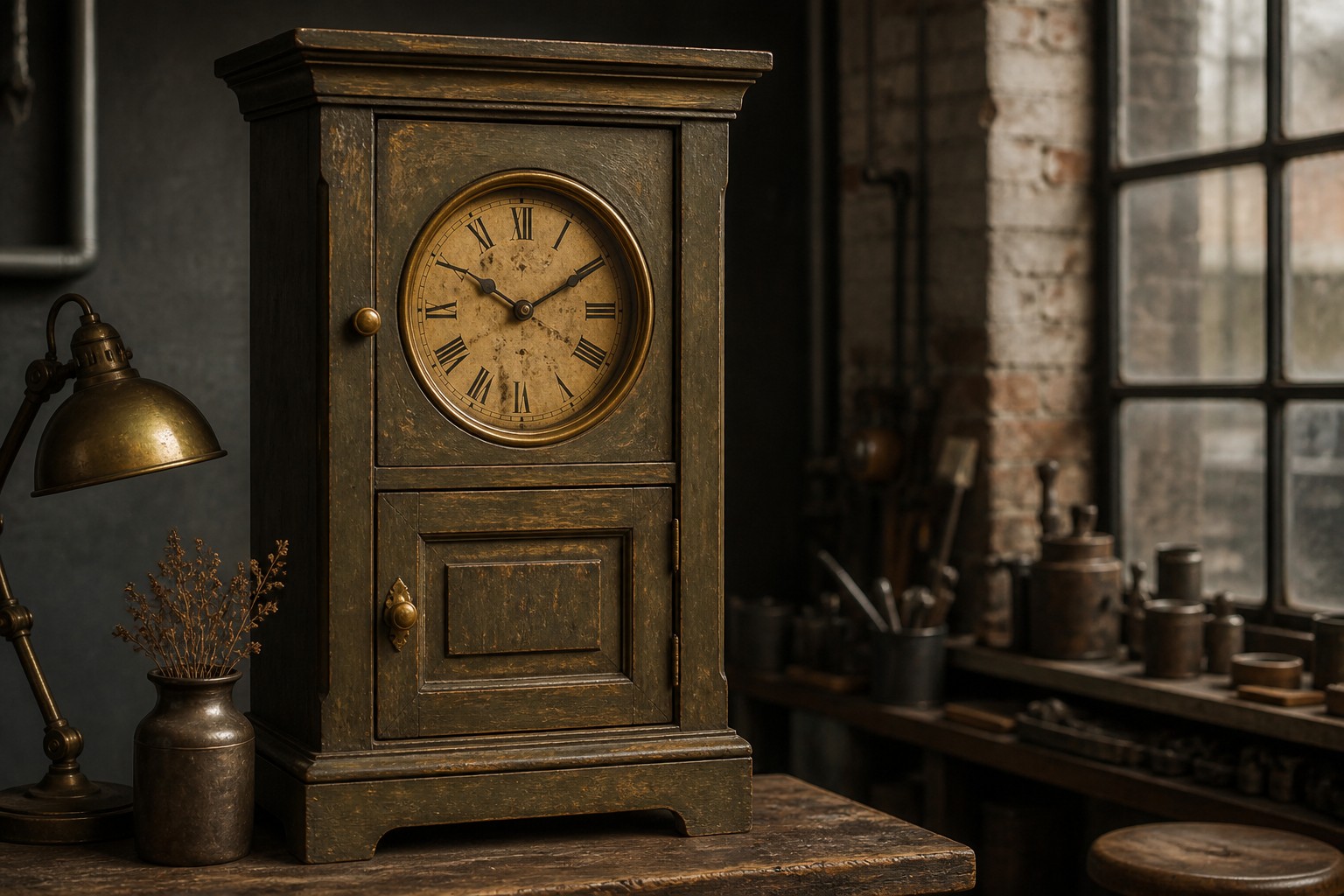
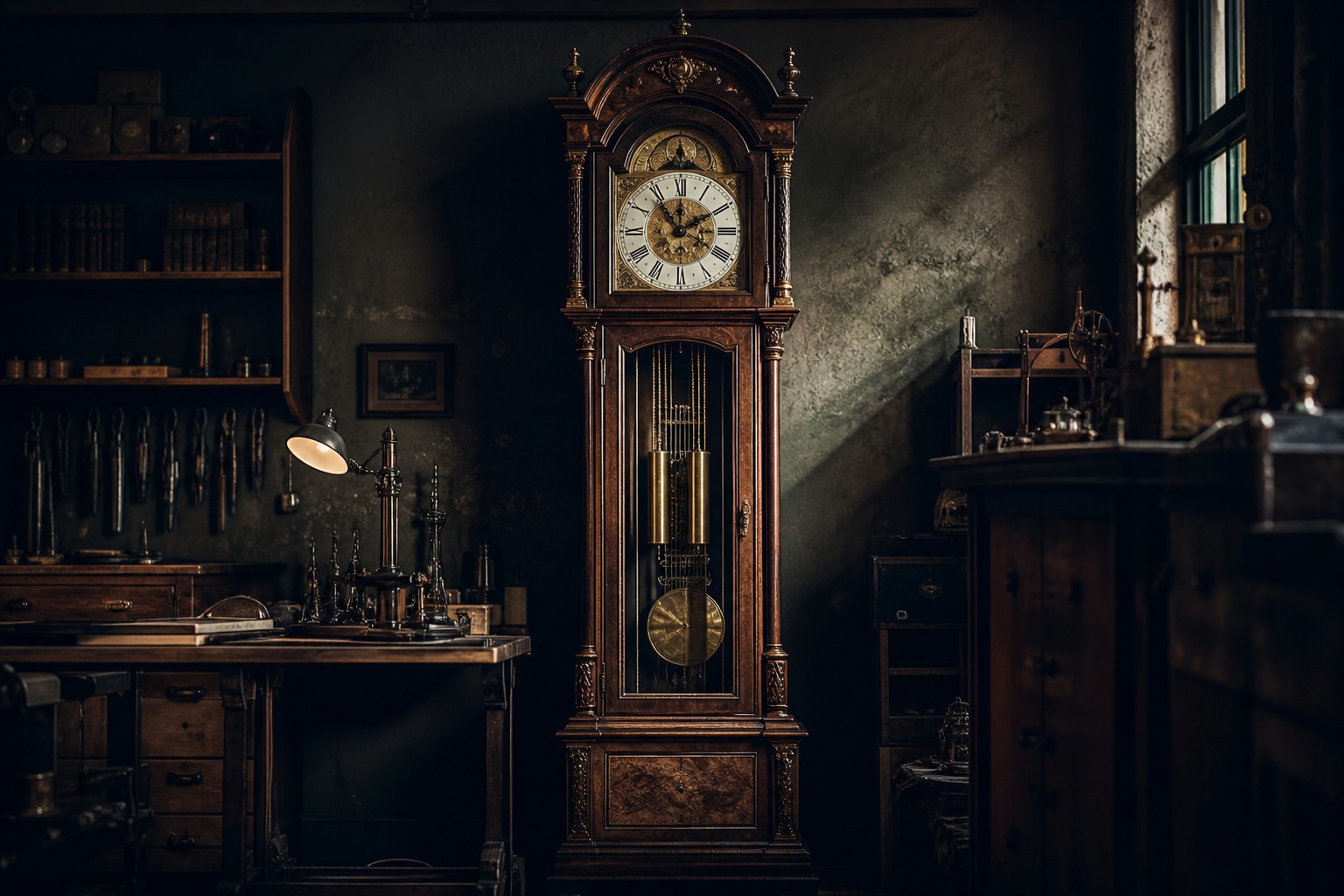
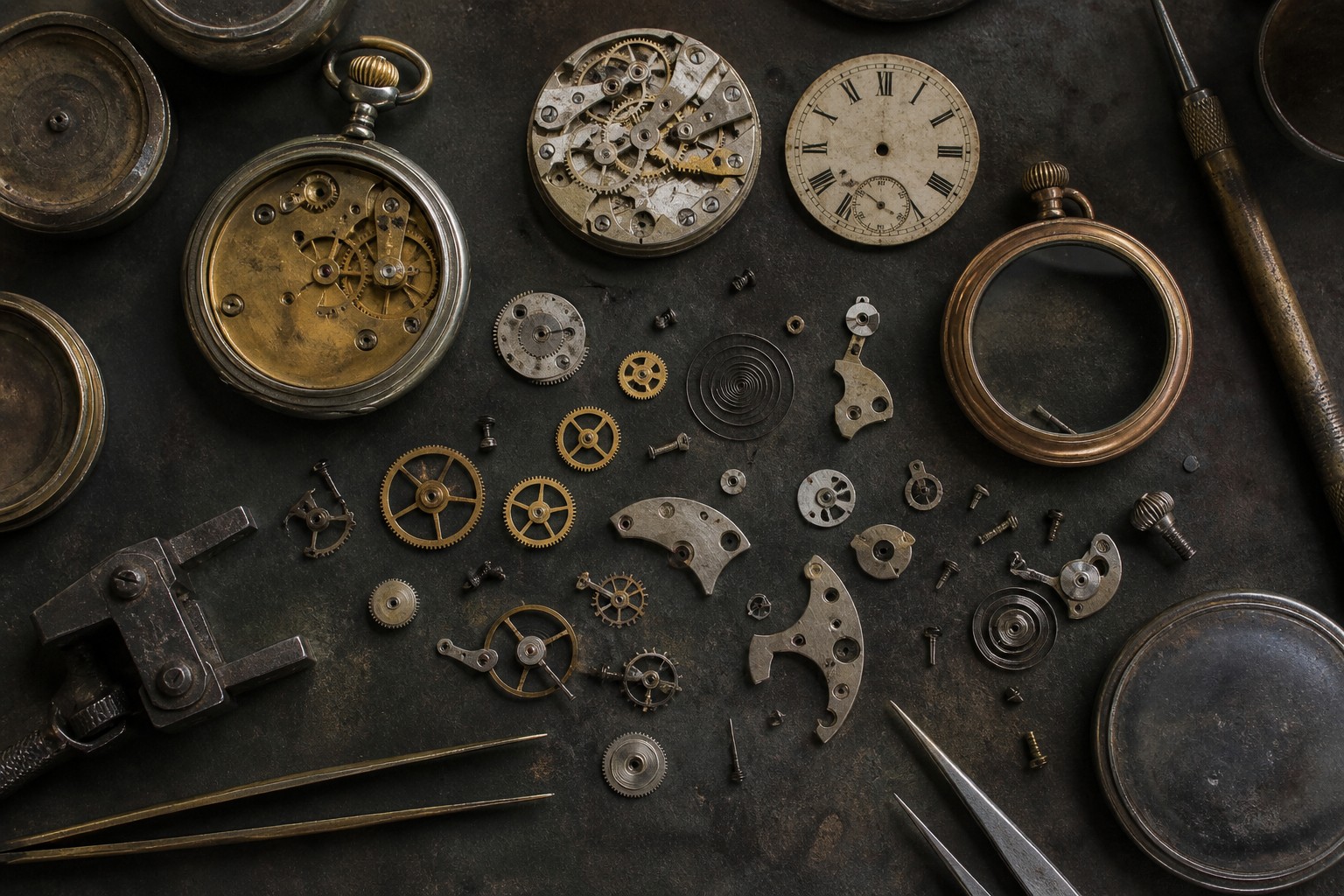
Photographs are more useful when they show condition clearly. Natural light, sharp focus and several angles can reveal whether the problem is cosmetic, mechanical or structural.
Bright orange powder usually indicates active corrosion. Dark, hard oxidation may be stable. Clear photographs help us decide whether the clock should be stopped immediately.
Cracks, lifting paint, worn numerals and loose chapter rings change the safest cleaning method. A dial should never be scrubbed before it is assessed.
Dark oil around pivots, dust packed into wheels or green residue on brass can show that a clock is running with harmful friction.
Gaps, loose veneer, swollen doors and tilted cases can affect both appearance and regulation. The case is part of the mechanism’s environment.
Keys, pendulums, bells, weights and hands should be photographed separately. Missing or incorrect parts can change the scope dramatically.
Fresh screws, modern glue, solder marks or mismatched bushings can be useful clues. They are not always bad, but they must be understood.
Good photographs do not replace inspection, but they prevent careless first steps.Trend Haven
Send the front, sides, back, dial, movement, key, pendulum or weights, and any damaged area in sharp natural light. Avoid filters and heavy flash. If a clock is unstable, do not open it simply to take a picture; contact us first.